

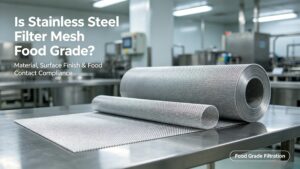
Many buyers from food and beverage, edible oil, dairy, wine and food processing industries often ask: Can stainless steel filter mesh be used for food-grade applications?
The short answer: Yes, but it depends on the stainless steel material, manufacturing process, surface treatment and food safety certification. Not all stainless steel filter mesh on the market automatically meets food contact standards.
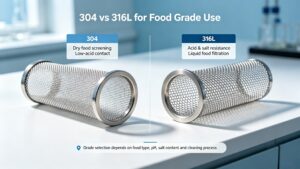
1. What Stainless Steel Grades Are Suitable for Food Grade Filtration?
• 304 Stainless Steel Filter Mesh: It is widely used for dry food screening, grain filtering, and low-acid food contact. It is cost-effective and common in food industry. But it has weaker corrosion resistance when contacting salt water, brine or acidic food.
• 316 / 316L Stainless Steel Filter Mesh: This is the preferred material for high-standard food-grade filtration. With molybdenum added, it shows excellent resistance against acid, salt and corrosion. It is widely used in dairy, beverage, edible oil, pickled food, CIP cleaning production lines, and projects requiring FDA food contact compliance.
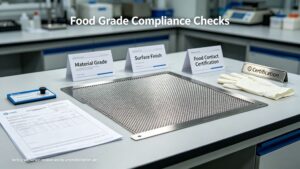
2. Key Standards & Certifications for Food Grade Stainless Steel Mesh
When purchasing food-grade stainless steel filter mesh, global food processors usually check these standards:
• FDA food contact standard (21 CFR)
• NSF/ANSI 51 for food equipment
• 3-A Sanitary Standards for dairy & beverage industry
Certification documents help verify whether the stainless steel mesh is safe for direct contact with food, liquid and edible products.
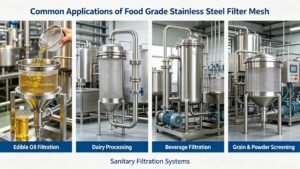
3. Common Application Scenarios of Food Grade Stainless Steel Filter Mesh
✅ Edible oil filtration
✅ Milk & dairy product filtration
✅ Fruit juice, wine and beverage filtration
✅ Grain, spice and powder screening
✅ Food industry solid-liquid separation
✅ Food factory CIP online cleaning system
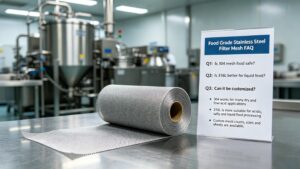
4. FAQ
Q1: Is 304 stainless steel mesh food safe?
A: 304 can be used for many dry and low-acid food applications. However, for salty, acidic or long-term liquid food contact, 316L is more recommended.
Q2: What is the difference between food grade 304 and 316L filter mesh?
A: 316L contains molybdenum, greatly improving anti-corrosion performance against chloride and acid. It is more suitable for liquid food processing and sanitary production.
Q3: Can you customize food grade stainless steel filter mesh?
A: Yes. We can produce custom woven stainless steel filter mesh in different mesh counts, micron sizes, rolls or cut sheets according to your drawing and requirements.
Conclusion
Stainless steel filter mesh can be food grade, but material selection, surface finish and food safety certification must be fully considered. For food and beverage industrial production, 316L stainless steel filter mesh is the top choice for sanitary and long-term safe operation.
If you need food grade stainless steel filter mesh for your food processing project, send your specifications to us. We will provide technical support and quotation for your filtration solution.